
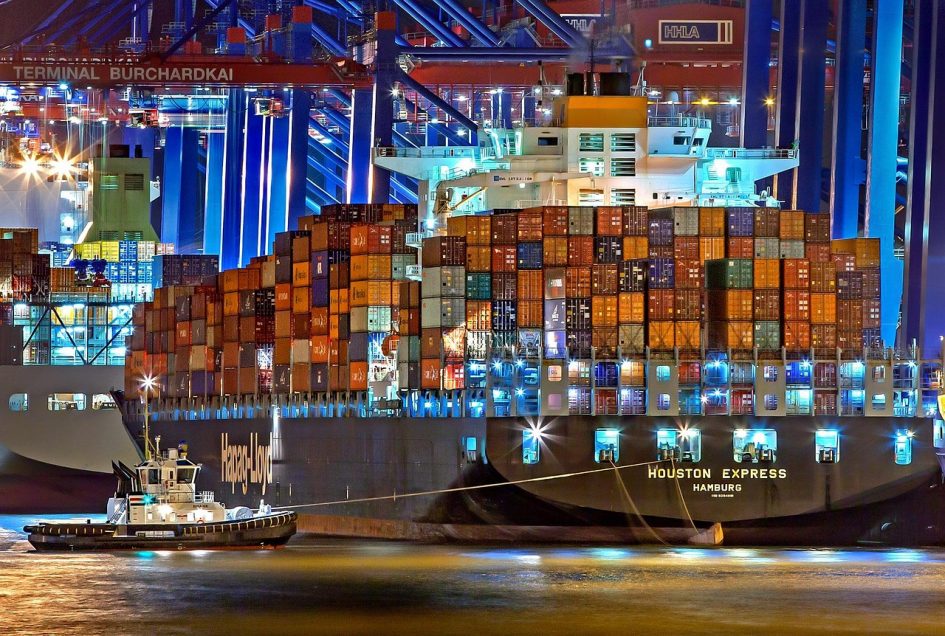
The customs bond market has historically been a stable, compliance-driven segment of the surety bond industry. Customs bonds are required by U.S. Customs and Border Protection to guarantee payment of duties, taxes, and fees owed on imported goods, as well as compliance with customs laws. When tariffs rise, the required limits on customs bonds increase correspondingly, and because premiums are commonly calculated as a function of bond amount, premium volume can rise sharply even when the number of principals remains unchanged.
Recent reporting has highlighted how tariff increases imposed under the International Emergency Economic Powers Act (IEEPA) triggered rapid growth in customs bonds for major surety writers. At the same time, the same reporting emphasized that this growth has been accompanied by rising collateral demands and operational strain as sureties adjust to higher exposure levels and stressed importer liquidity (Sellers 2026). This dynamic raises a critical question for surety professionals. Does this represent sustainable growth, or does it resemble a premium bubble that could unwind quickly, potentially accompanied by a loss bubble?
The mechanics behind the boom: surety bond sufficiency and sudden limit inflation
CBP bond sufficiency is a regulatory process, not a discretionary underwriting preference. Continuous customs bonds are generally set based on a formula tied to the importer’s estimated duties, taxes, and fees over a prior twelve-month period, subject to minimum thresholds. CBP periodically reviews bond sufficiency and may require additional security when duties increase or import volume changes materially (U.S. Customs and Border Protection 2024).
When tariff rates rise, the impact on customs bonds is mechanical. Higher duties increase the importer’s rolling duty exposure, which in turn increases the likelihood that CBP will issue a bond insufficiency notice. Industry organizations representing customs brokers have explained that insufficiency determinations are backward-looking, based on duties paid to date, while importers must forecast future activity to avoid repeated insufficiency events (National Customs Brokers and Forwarders Association of America 2025).
Recent industry reporting described a sharp increase in insufficiency notices and significant jumps in bond limits, in some cases, multiples of prior limits. As limits increase, sureties often require collateral to manage heightened exposure, transferring liquidity stress to importers while creating operational complexity for surety underwriters and claims staff (Sellers 2026).
Premium bubble risk: revenue driven by policy rather than credit
A premium bubble in customs bonds does not require defaults or claims. It arises when premium growth is driven by external policy rather than by organic expansion of creditworthy activity. In the current environment, tariff policy uncertainty is front and center. Ongoing litigation over the legality of certain tariffs, including cases before the Supreme Court, has underscored the possibility that tariffs could be reduced, invalidated, or restructured (Shalal, Heavey, and Lawder 2026).
If tariffs are reduced or struck down, customs bond limits would be recalculated downward, premiums would contract, and importers would seek the release of collateral posted during the high-tariff period. Industry commentary has already noted that such a scenario would place heavy administrative and reputational pressure on sureties, even in the absence of losses (Sellers 2026).
Legal analysts have also noted that even if specific tariffs are invalidated, future tariffs could be imposed under alternative statutory authorities. This suggests that premium volatility, rather than a clean reversion to a prior baseline, may characterize the customs bond market for some time (Lexology 2026). For surety carriers, this volatility complicates planning and can obscure whether recent premium performance reflects sustainable underwriting success or temporary limit inflation.
Loss bubble risk: when growth outpaces underwriting discipline
A loss bubble emerges not from policy reversal but from credit misjudgment. Customs bonds present particular loss sensitivity because the obligee is the federal government, which enforces payment obligations rigorously. When duties are unpaid, claims against the surety bond are direct and difficult to contest.
Three structural stressors are particularly relevant.
First, the rise in insufficiency notices is a leading indicator of financial strain. Reporting has shown a material increase in insufficiency determinations, with many involving relatively small bond sizes. This pattern suggests stress among smaller and mid-sized importers that may have limited liquidity buffers (Sellers 2026). From a surety perspective, repeated insufficiencies often correlate with principals operating at the margin of their financial capacity.
Second, bond stacking increases aggregate exposure. Industry analysis has described situations in which importers must post additional customs bonds on top of existing bonds prior to renewal, resulting in layered liability. While each incremental bond may appear manageable, the combined exposure can exceed what the importer’s balance sheet can reasonably support (S&P Global Market Intelligence 2025). In the surety bond context, failure to manage aggregate exposure can turn incremental underwriting decisions into systemic account risk.
Third, duration and liquidity drag amplify loss potential. CBP’s duty finalization process can extend for many months, during which collateral remains tied up. Prolonged collateral lockup can weaken importer liquidity, increasing the probability of default and, ultimately, surety bond claims (Sellers 2026). This creates a reflexive cycle in which tariffs increase duties, duties increase bond limits, bond limits increase collateral demands, and collateral demands impair the importer’s ability to meet obligations.
The most realistic customs bond bust scenario
The most plausible customs bond bust is not an industry-wide collapse but a two-phase adjustment that combines earnings volatility with selective credit losses. In the first phase, premium volume contracts as tariffs are reduced, restructured, or challenged on legality. This phase is characterized by recalculations of bond limits, premium adjustments, and disputes over the timing and scope of collateral release (Sellers 2026). While painful, this phase primarily affects earnings stability and operational efficiency.
In the second phase, losses emerge in a narrower subset of accounts. These losses are concentrated among importers that experienced rapid limit inflation without corresponding strengthening of financial controls, working capital, or pricing power. For such principals, the customs bond transitions from a routine compliance instrument into a leverage point where liquidity stress converts into delinquent duties and bond claims.
Underwriting controls that mitigate bubble risk
Disciplined surety underwriting can distinguish between legitimate opportunity and latent bubble risk. Continuous monitoring of duty trajectories is essential. CBP guidance emphasizes periodic review and adjustment of bond amounts, making static annual underwriting insufficient in a volatile tariff environment (U.S. Customs and Border Protection 2024).
Explicit management of aggregate exposure is equally critical. When additional customs bonds are required, underwriters should evaluate total liability rather than treating each bond as a standalone transaction. Industry analysis of bond stacking demonstrates how aggregate exposure can escalate quickly if not actively managed (S&P Global Market Intelligence 2025).
Collateral should be treated as a credit tool, not merely a transactional requirement. While increased collateralization has been widely reported, collateral must be properly sized and operationally accessible to be effective. Inadequate or poorly structured collateral can create a false sense of security while leaving the surety exposed to both financial and reputational loss (Sellers 2026).
Customs bonds are exhibiting characteristics of both a premium bubble and a potential loss bubble, but through distinct mechanisms. The premium bubble is policy-driven and reversible, creating earnings volatility rather than immediate claims exposure. The loss bubble is credit-driven and selective, emerging where underwriting discipline fails to keep pace with rapid exposure growth.
For the surety bond industry, the lesson is not to avoid customs bonds, but to approach current growth with disciplined skepticism. Customs bond opportunity remains real, but it must be evaluated through the lens of policy volatility, rolling exposure, and importer liquidity. Without that discipline, what appears to be a profitable expansion can become a painful correction.
~ C. Constantin Poindexter, MA, JD, CPCU, AFSB, ASLI, ARe, AINS, AIS
Bibliography
- Lexology. 2026. “Practical Considerations if the Supreme Court Finds IEEPA-Based Tariffs Unlawful.” January.
- National Customs Brokers and Forwarders Association of America. 2025. “Importers Face Bond Insufficiency and Compliance Hurdles Amid New Tariffs.” April.
- Sellers, Matthew. 2026. “How Tariffs Are Making One Sector Boom for RLI, CNA and Chubb.” Insurance Business, February.
- Shalal, Andrea, Susan Heavey, and David Lawder. 2026. “U.S. Trade Negotiator Says Supreme Court Understands Enormous Stakes in Tariff Case.” Reuters, February.
- S&P Global Market Intelligence. 2025. “U.S. Importers Scramble to Manage Large Increases in Bond Outlay Linked to Higher Tariffs.” July.
- U.S. Customs and Border Protection. 2024. A Guide for the Public: How CBP Sets Bond Amounts. February.
Need a new good read on surety bonds? Try The Contractor’s Guide to Surety Bonds: A Primer on Contract Surety Bonding for Construction Professionals